LRR proteins help neurons find a partner
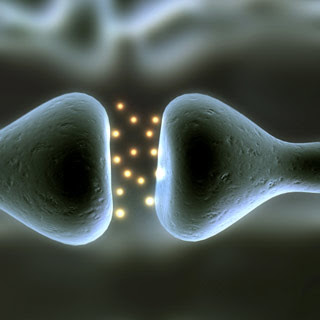
Matching 100 billion neurons with their appropriate partners is a daunting task, especially when each neuron can make synaptic contact with about 1,000 other cells. Nevertheless, the developing brain accomplishes this feat with remarkable specificity – neurons from each area of the brain send out axons which follow a stereotyped pathway to find their appropriate targets, guided by signpost proteins along the way. Once in the right general area they have to select specific cell types with which to form a synapse, often limited to a certain layer or sub-region. Many cells will even form synapses specifically with distinct subcellular compartments of their target cells – on distal or proximal parts of the dendrites or directly on to the cell body, for example. Specifying this level of connectivity, with the numerical complexity of the mammalian brain, obviously requires a large number of labels that can be used to match synaptic partners (even allowing for some level of combinatorial ...