Posts

Coloured hearing in Williams syndrome

Image
The idea that our genes can affect many of the traits that define us as individuals, including our personality, intelligence, talents and interests is one that some people find hard to accept. That this is the case is very clearly and dramatically demonstrated, however, by a number of genetic conditions, which have characteristic profiles of psychological traits. Genetic effects include influences on perception, sometimes quite profound, and other times remarkably selective. A recent study suggests that differences in perception in two conditions, synaesthesia and Williams syndrome, may share some unexpected similarities. Williams syndrome is a genomic disorder caused by deletion of a specific segment of chromosome 7. Due to the presence of a number of repeated sequences, this region is prone to errors during replication that can result in deletion of the intervening stretch of the chromosome, which contains approximately 28 genes. The disorder is characterised by typical facia...


When to blame your parents, and for what

Image
Studies linking some aspect of parental behaviour with some trait in their offspring are depressingly common in the sociological literature. Though these studies typically only report a correlation between parental behaviour and whatever the trait is in the offspring, the implication, and often the explicit conclusion, is that one causes the other. These kinds of stories get huge play in the popular press (and in the blogosphere), where the conclusion of a causative relationship is rarely challenged. For example, the finding that children who grow up with more books in the house are more successful academically is taken as evidence that simply having books around makes kids smarter. This kind of thinking illustrates a common and fundamental flaw in interpreting sociological or epidemiological findings – correlation does not imply causation . Red hair and freckles are highly correlated but one does not cause the other. Both are caused by something else (a mutation in a gene contro...

Defining developmental disorders through genetics

Image
To many people, the term “autism” suggests a specific disorder – one with characteristic and recognizable symptoms, presumably reflecting the same underlying cause.   In fact, no such disorder exists.   Autism refers to a variable spectrum of symptoms – including deficits in social interaction, impaired communication (especially a delay in developing language), narrow, restricted interests and stereotyped behaviours.   Any one child who is diagnosed with autism may show only some of these symptoms.   There is a wide range of IQ in autism, including very high levels seen in what has been known as Asperger’s syndrome, but the average is about 70.   There is also a high incidence of epilepsy (around 10%). Psychiatrists have long recognized this variability and use the term “ autism spectrum disorder ” to encompass the entire range.   Until recently, with a couple of exceptions, they have not had the means to distinguish different subtypes of autism based on their underlying cause.   O...

Migrating neurons clear their path

Image
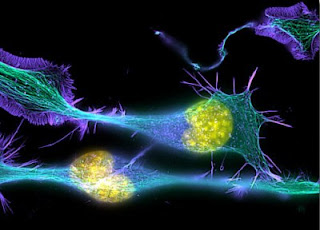
Most neurons in the brain are not born in their final position – they are generated by cell division in one part of the brain and have to migrate, sometimes over long distances, along complicated routes, to finally arrive at their pre-specified destination.   This process entails an incredibly complex and dynamic set of genetic instructions and interactions between different cell types.   A prime example is the migration of interneurons to the cerebral cortex – these inhibitory neurons make up one half of a balancing act that controls all cognitive functions in the cortex, but, unlike the excitatory neurons of the cortex, they are born in a completely different part of the brain (what will become the striatum).   Many researchers have been trying to understand how these neurons find their way specifically to the cortex.   A number of genes have been found which encode guidance cues which can attract or repel the migrating neurons and which mark out their correct pathway.   These cues...

Remote control neurons

Image
Clever, elegant and extremely powerful – techniques to activate specific sets of neurons with light have the potential to revolutionise cellular and systems neuroscience.   Optogenetics has already been used to address a number of questions which have been resistant to answer by other techniques, and also holds great promise for neurotherapeutics and prosthetics.   A new paper adds another approach to the toolkit – the ability to activate neurons with a radio frequency magnetic field.   While very much a proof of principle, with a ways to go before it proves its worth, this approach offers some obvious advantages over optogenetics, most obviously that magnetic fields pass into brains much more readily than light.   When trying to figure out what different brain circuits do, one of the most obvious experimental approaches is to ask: what happens if I make these neurons fire? Neuroscientists have traditionally used electrodes to activate neurons in the brain or in slices of brain tiss...

Sexual orientation – wired that way

Image
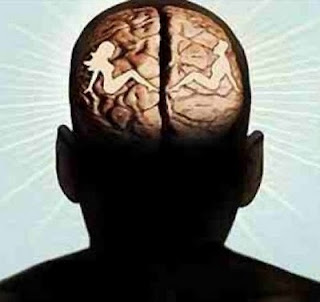
In a recent post , I presented the evidence that sexual preference is strongly influenced by genetic variation.   Here, I discuss the neurobiological evidence that shows that the brains of homosexual men and women are wired differently from those of their heterosexual counterparts.    First, we must consider the differences between the brains of heterosexual males and females.   These differences are extensive and arise mainly due to the influence of testosterone during a critical period of early development (see Wired for Sex ).   They include, not surprisingly, differences in the number of neurons in specific regions of the brain involved in reproductive or sexual behaviours as well as differences in the number of nerve fibres connecting these areas.   But they also involve areas not dedicated to these types of behaviours, such as the cerebellum , for example, which is involved in motor control among other things, and which shows a very large difference between men and women.   A...

What is a “neurodevelopmental disorder”?

Image
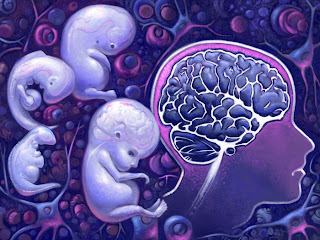
This question arose at the recent, excellent meeting of the International Society for Developmental Neuroscience in Estoril, Portugal.   The question came up due to some very exciting and very unexpected successes in reversing in adult animals the effects of mutations causing neurodevelopmental disorders, including neurofibromatosis, Down syndrome, Rett syndrome and tuberous sclerosis.   All of these disorders are caused by specific genetic lesions and characterised by very early deficits, variously including intellectual disability, autism, epilepsy and other psychological and neurological phenotypes.   They are also associated with some degree of neuropathology, usually involving differences in the elaboration of neuronal morphology, branching and connectivity.    Because of the early onset of symptoms, these disorders have traditionally been considered as being due to defects in neurodevelopment   that have led to a permanently structurally compromised brain.   The last thing...